
I have always had a soft corner for lesser-known temples. The quieter they are, the closer they seem to the divine. There is something deeply comforting about sitting in a prahāram without the hum of crowds or the shuffle of hurried feet — just a hush that settles around you so gently, it stirs something within. A stillness so complete that you feel like breaking into song, unselfconscious and free.
One such hidden gem is Ayyangar Kulam, near Kanchipuram.
On December 28th, Senthil and I signed up for a one-day heritage trip with the well-known historian Dr. Chitra Madhavan. This was our very first stop. Little did we know how beautifully layered the morning would be— history, legend, architecture, and devotion seamlessly interwoven, along with the easy camaraderie of friendships that blossomed, if only for that one shared day. And this little town, Ayyangar Kulam was our first stop-The Sanjivirayar temple and the Nadawavi (step well)
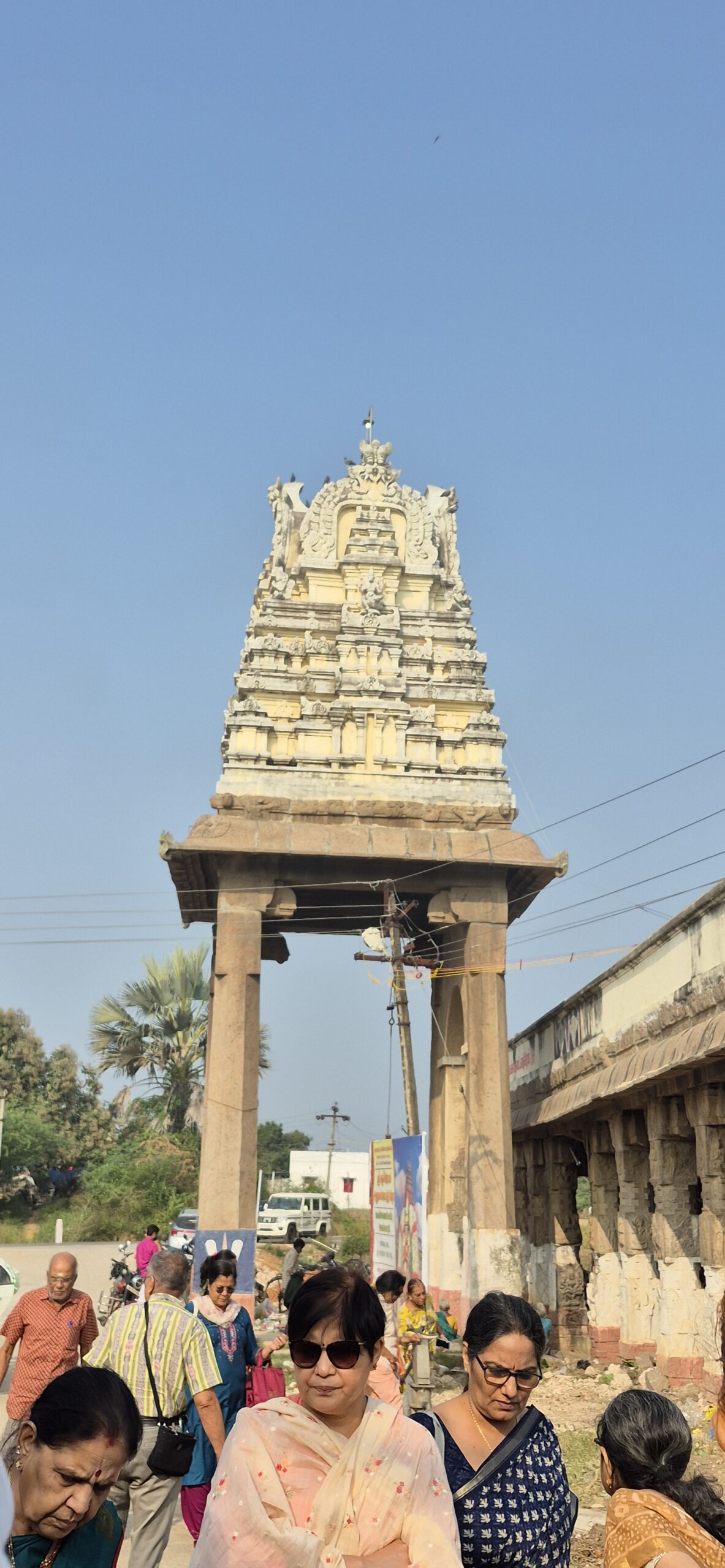
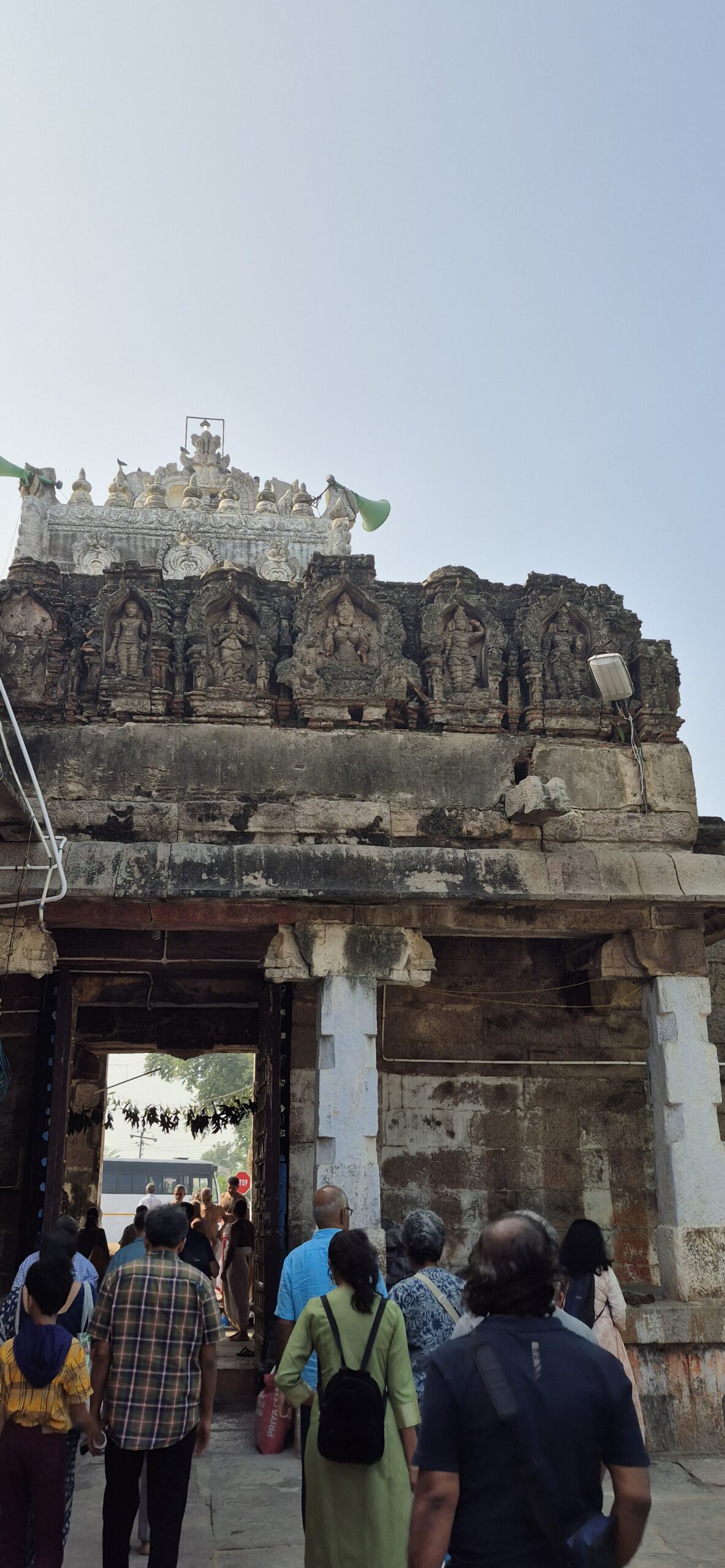
As our bus approached the temple, we realised a local festival was underway. A few cars lined the sides, devotees moved about briskly, and the temple wore a festive air. At the entrance stood a tall four-pillared mandapam. Dr. Chithra remarked that what we were seeing was actually the back of the temple. The main entrance faced a vast lake — which we would eventually see and marvel.
We gathered around her as she began narrating the temple’s origin. The day was mercifully mild; the sun had not yet grown harsh. Of course it was just around 9.30 AM. We stood fresh and attentive, eager to listen. We were a mixed bunch of people of all ages, temple and history enthusiasts. I was glad I signed up for this one-day trip!
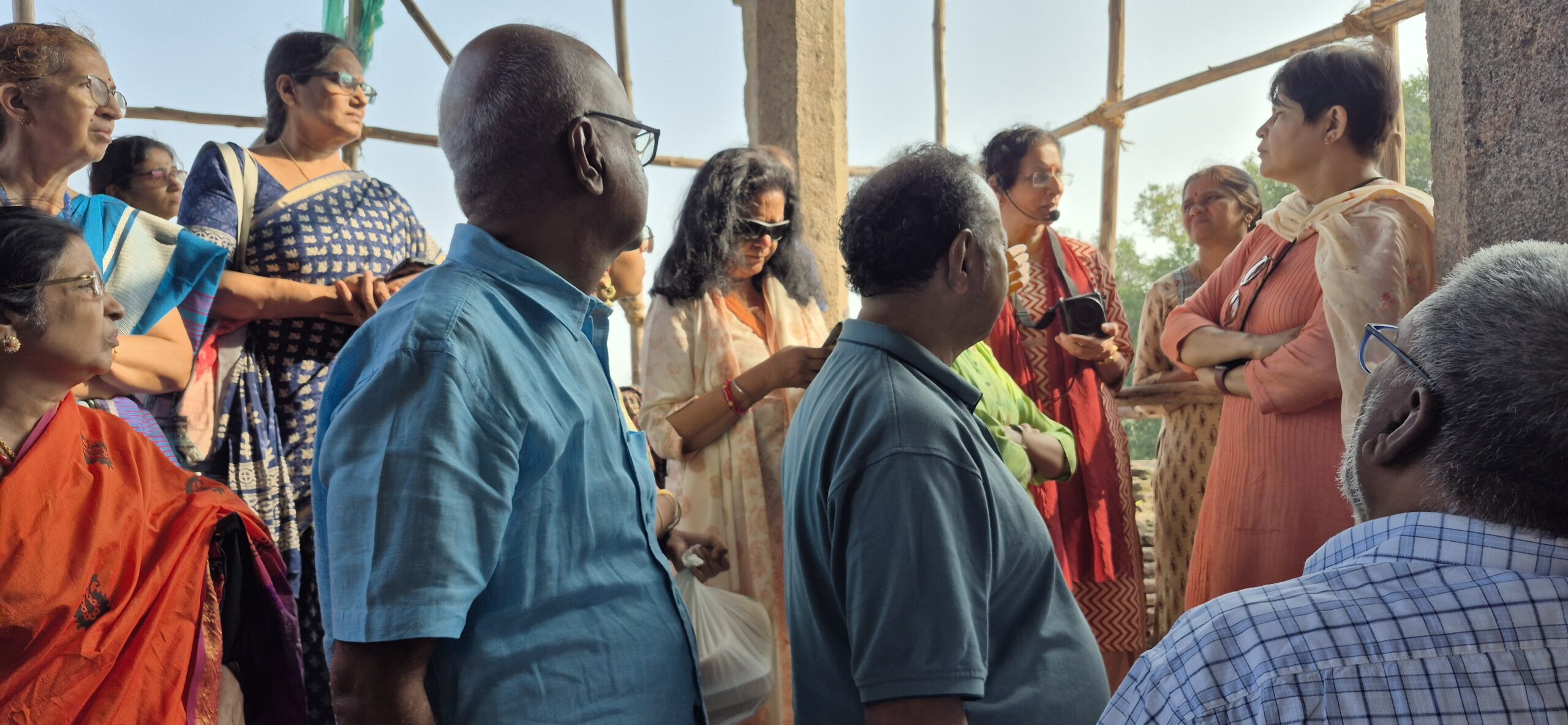
Legend tells us that when Hanuman was carrying the Sanjeevi mountain to Lanka, a fragment of it fell here. Because of this sacred association, the presiding deity is called Sanjivirayar. Even as we listened, the connection felt fitting — in my mind a fleeting video was playing… the mighty Hanuman flying over this little town carrying the mountain.
At the same time, I found myself smiling at a tender thought. Across India, village after village, people lovingly believe that some episode from the Ramayana happened right there, on their soil. A hill, a rock, a pond — each becomes part of that epic memory. It speaks not so much of historical authentication as of affection. Of how deeply the story lives in the hearts of people.
And perhaps that is what truly matters. Whether or not every legend can be traced to documented fact, the devotion behind it is real. The love is real. And that love has the power to sanctify any space.
The temple was built by Lakshmi Kumara Thathachariyar, also known as Thatha Desikan, who served as the Chief Minister to a Vijayanagara king between 1586 and 1614. A spiritual advisor and an able administrator, he effectively governed the entire Kanchi region. So revered was he that he earned the title Koti Kanyadanam for conducting numerous marriages. It is also believed that he had the vimānam of the Varadaraja Perumal temple in Kanchipuram covered in gold — which is why it is called the Kalyana Koti Vimānam.
We entered the temple. It was abuzz with activity. Devotees were decorating and preparing for rituals. But I imagined that on most days, it would return to its quiet self, which was confirmed by Dr Chithra.
After darshan of Sanjivirayar, we performed a pradakshinam around the inner prahāram. As we stepped out, we had to gently bend our heads — the doorway was deliberately low, as in many ancient temples. A reminder that after standing in the presence of the sacred, we must leave with our heads bowed, having shed at least a little of our ego along the way.
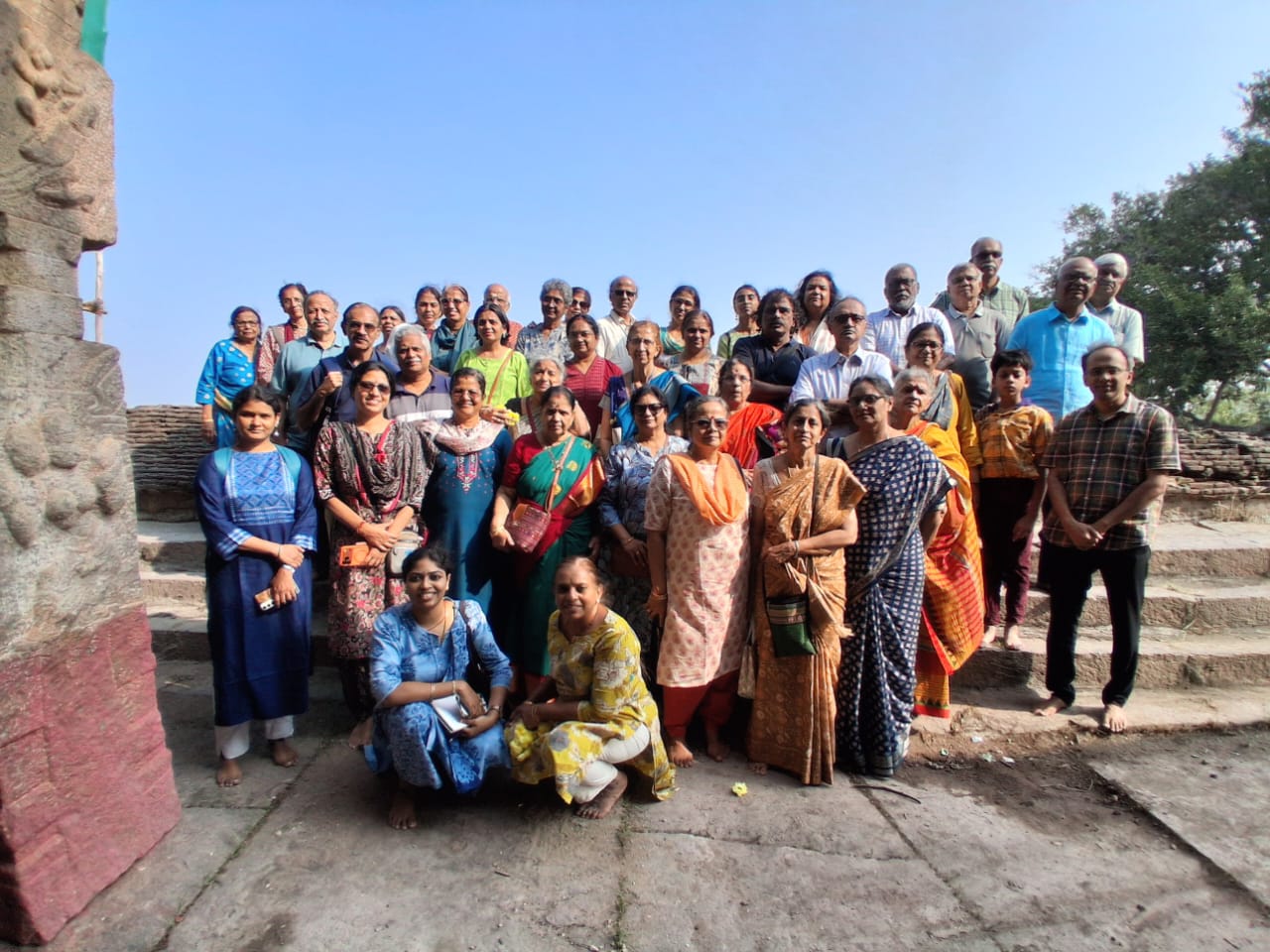
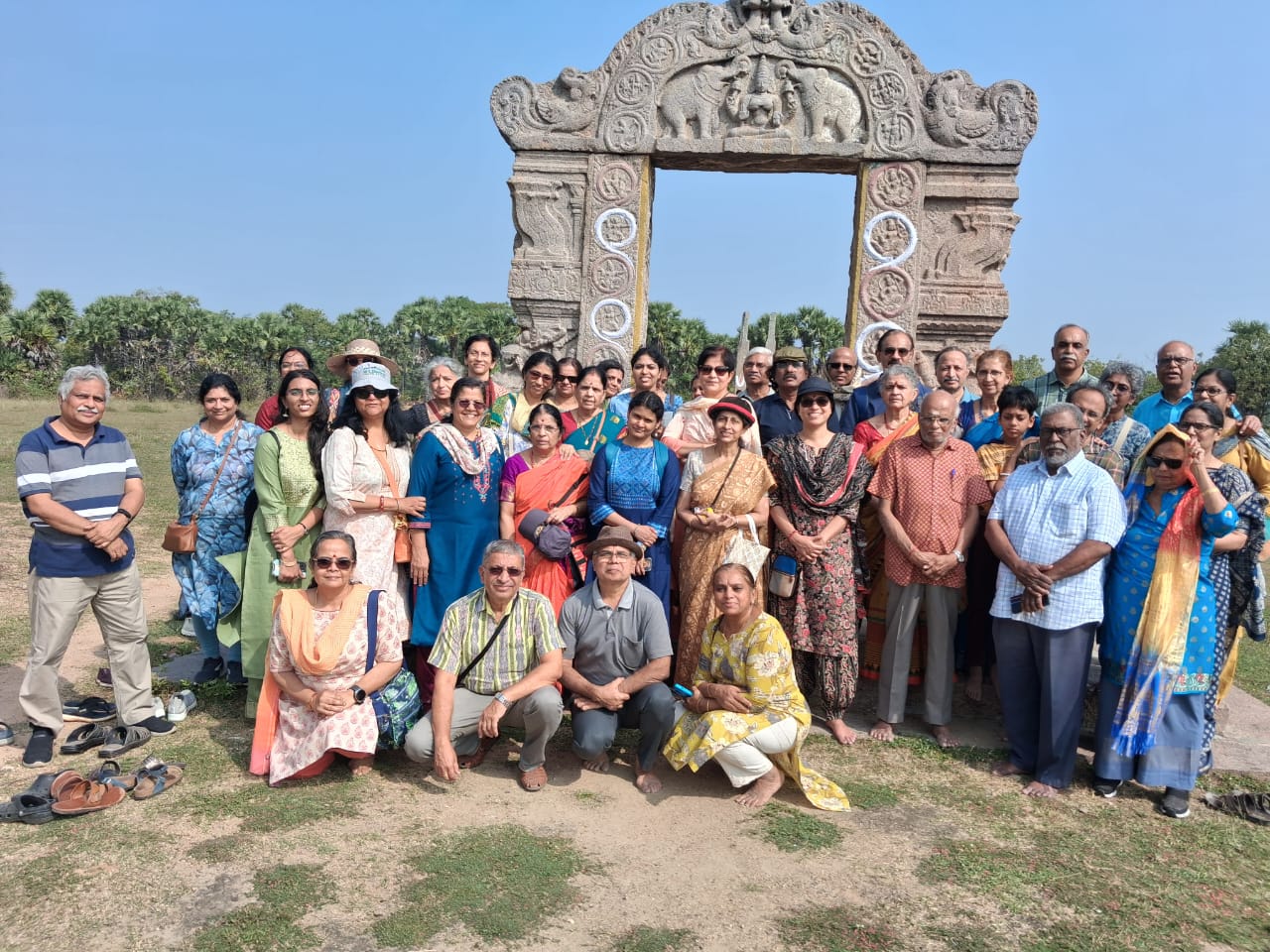
On the other side of the temple stood magnificent carved pillars. Restoration work was underway. Lakshmi Kumara Thathachariyar had also constructed a vast tank/lake — measuring nearly 150 acres — called Lakshmi Saras or Thatha Samudram. We climbed up the mandapam and there it lay before us — a huge expanse of water shimmering under the morning light. I believe there were exquisite sculptures around the lake as well. We took a group photograph with this majestic backdrop.
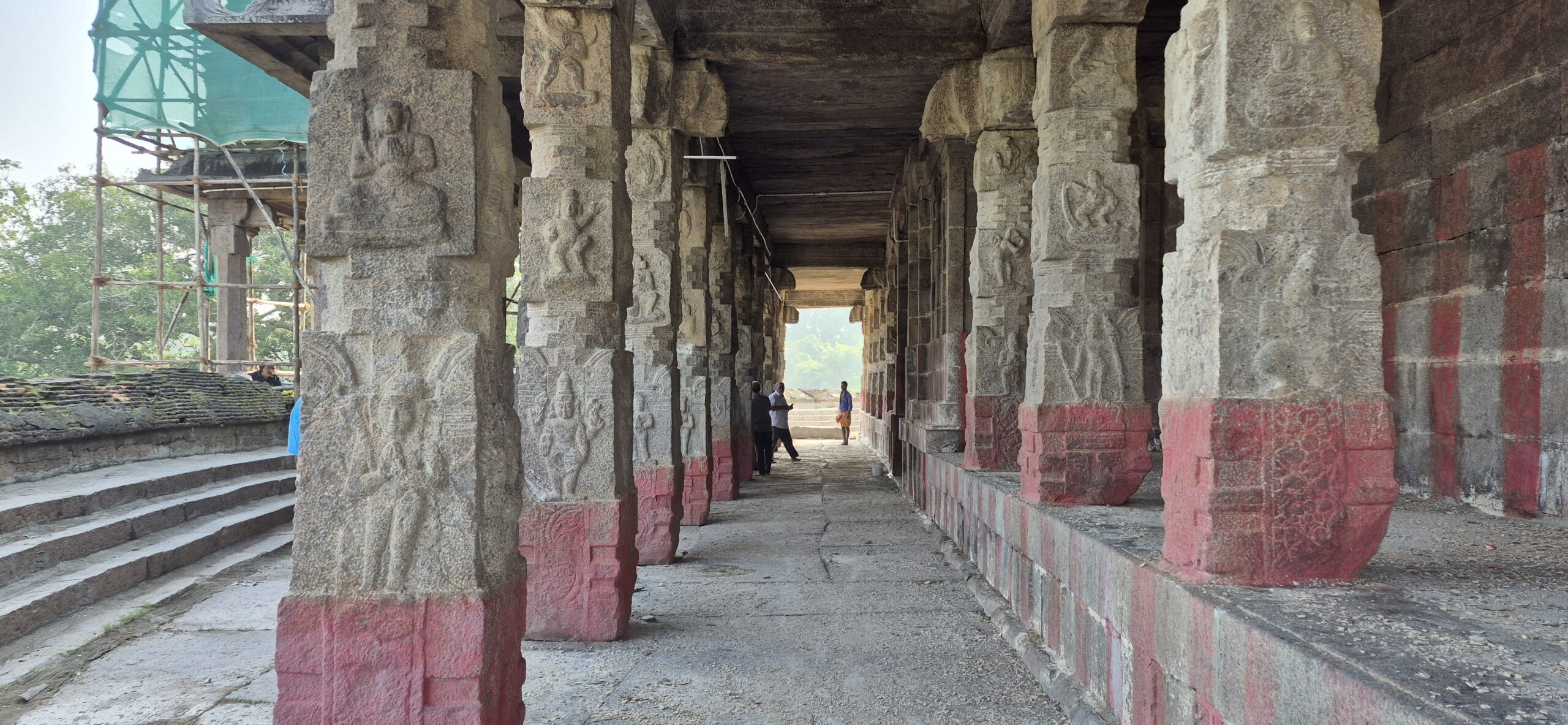
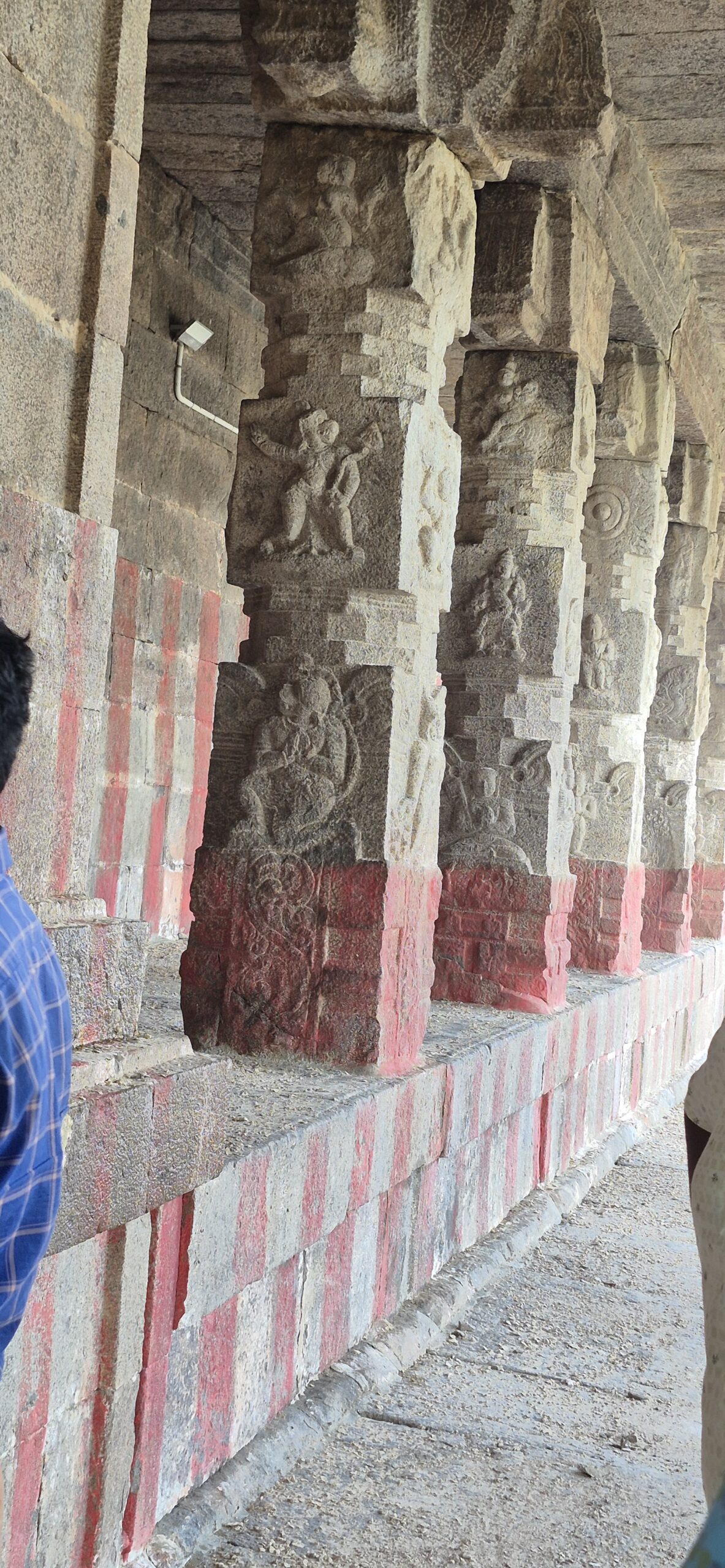
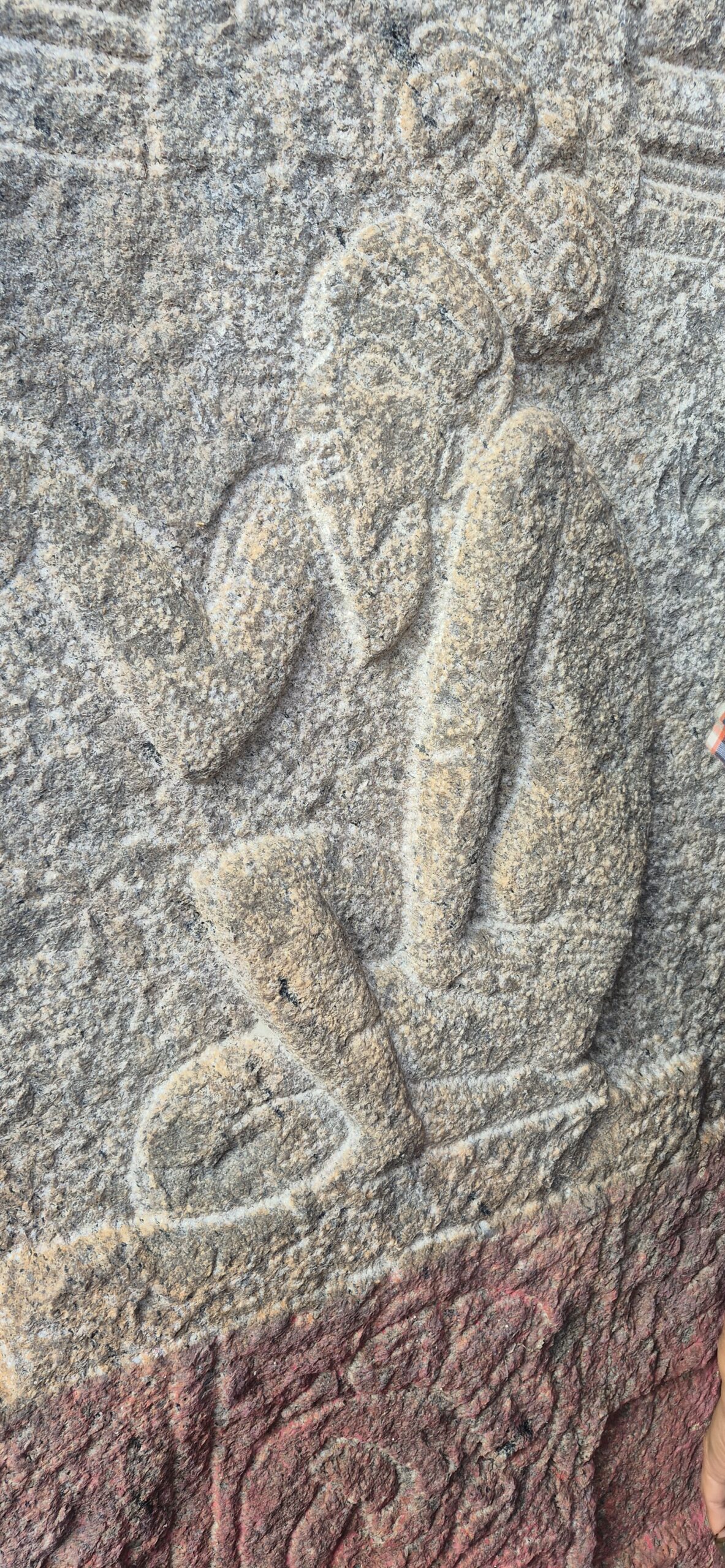
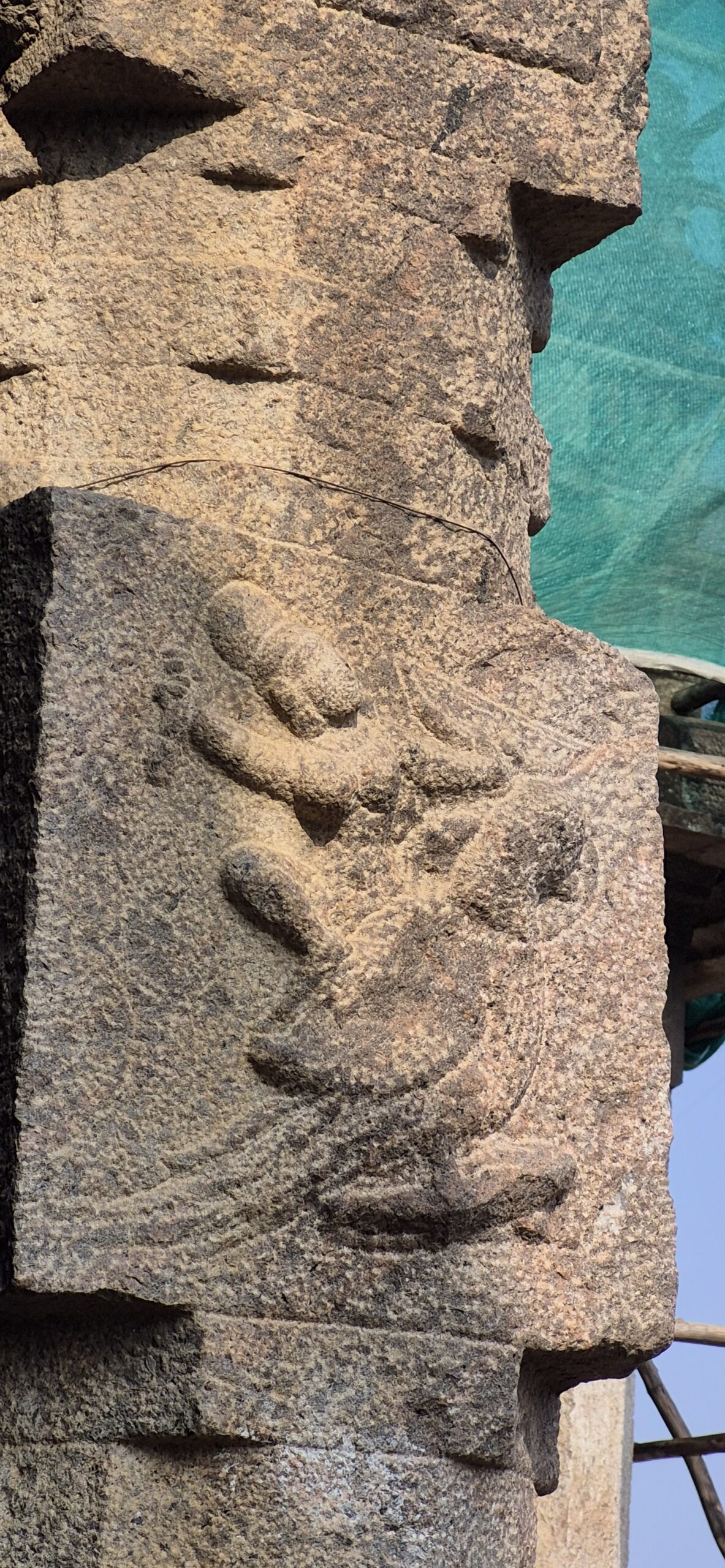
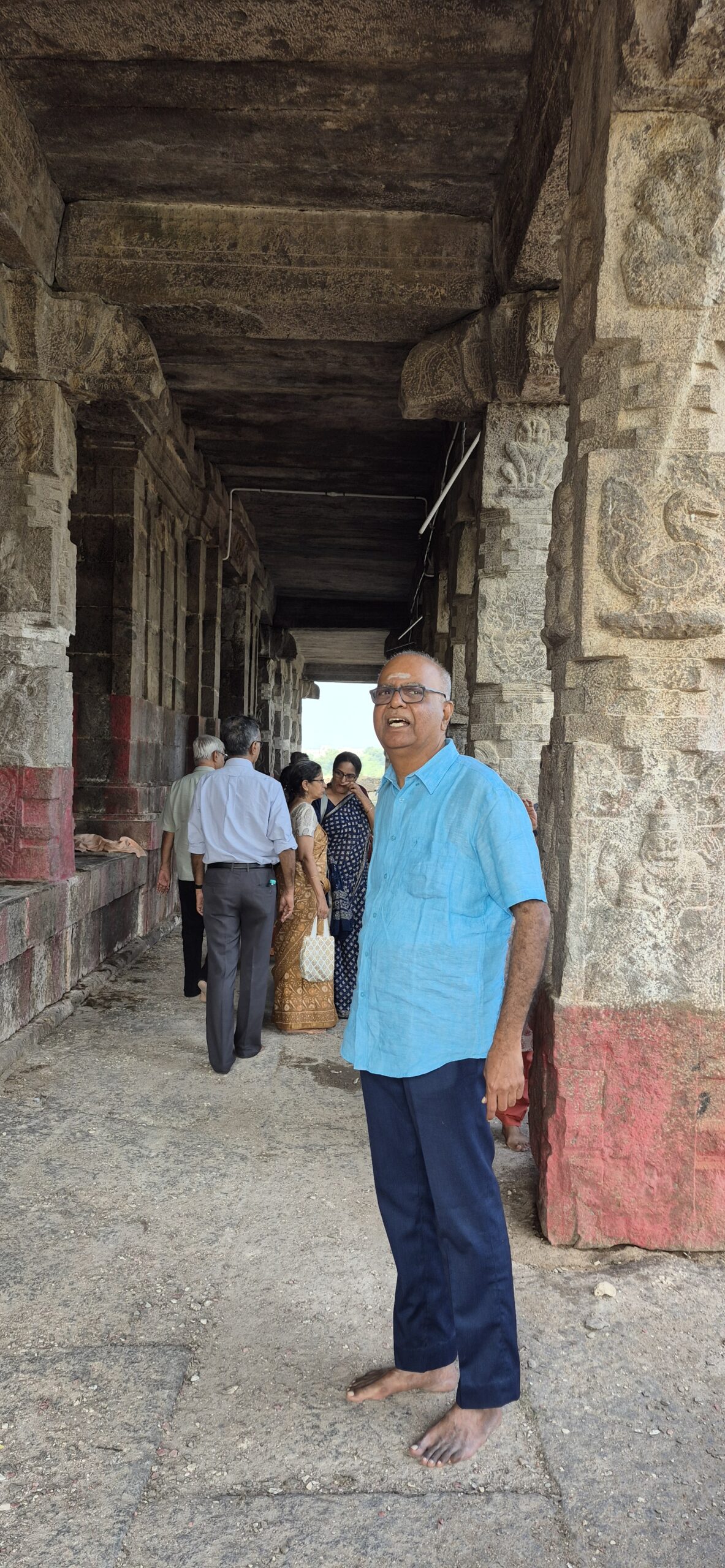
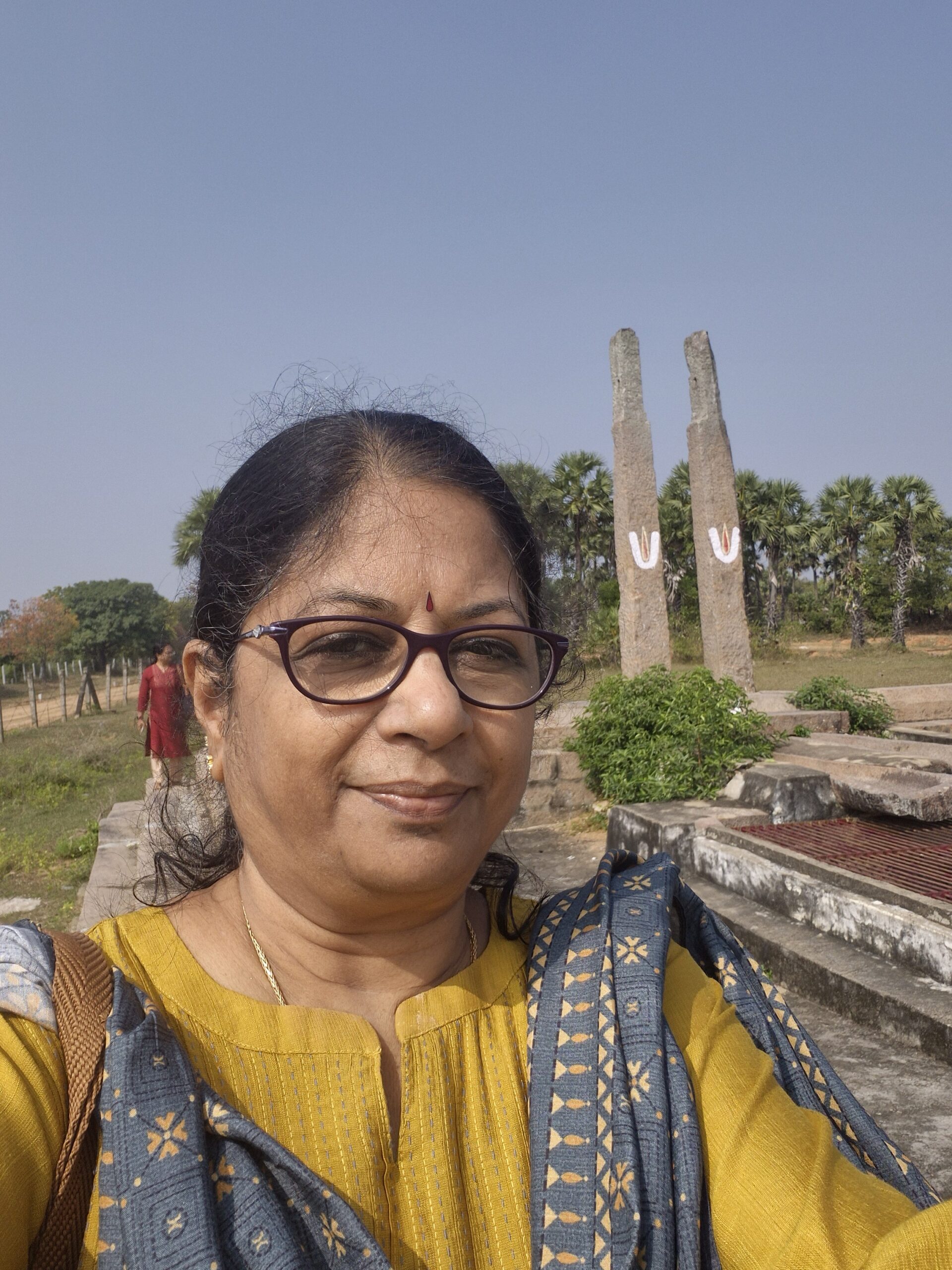
The pillars were a delight to behold, adorned predominantly with sculptures of Anjaneya. It is said that nearly 85 forms of Hanuman are represented here.
Some of us moved about briskly, clicking pictures in quick succession, eager to capture and carry home at least a fraction of that sculpted beauty.
But what made Thathachaariyaar build this temple?
There is a compelling story. Lakshmi Kumara Thathachariyar, while travelling with collected taxes, was waylaid near Ayyangar Kulam by a band of thieves who sought to seize the wealth. In that moment of danger, he composed and recited twenty Sanskrit verses in praise of Hanuman — the Hanumath Vimsathi. Miraculously protected, he later had those very verses inscribed on the temple walls. Such is the power of Hanuman and the verses created impromptu.
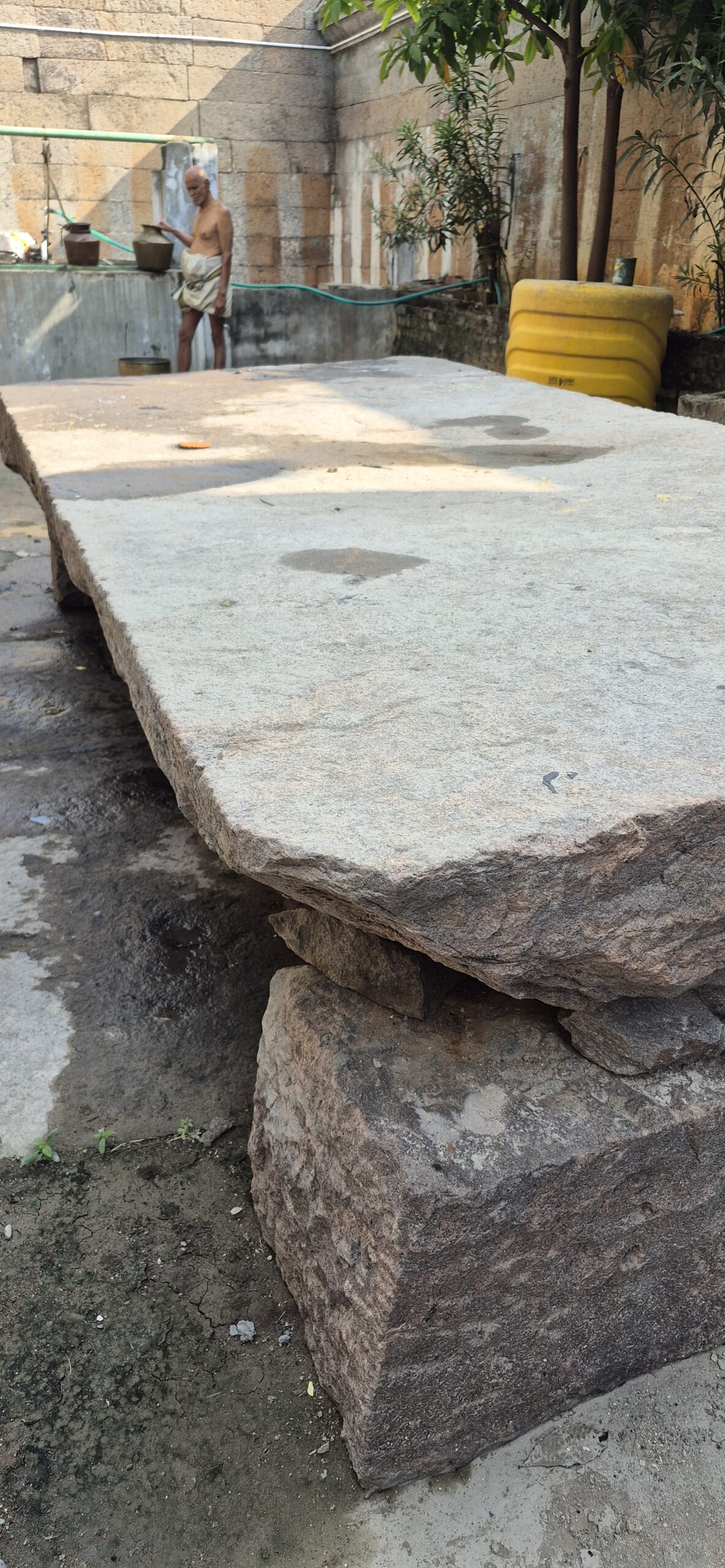
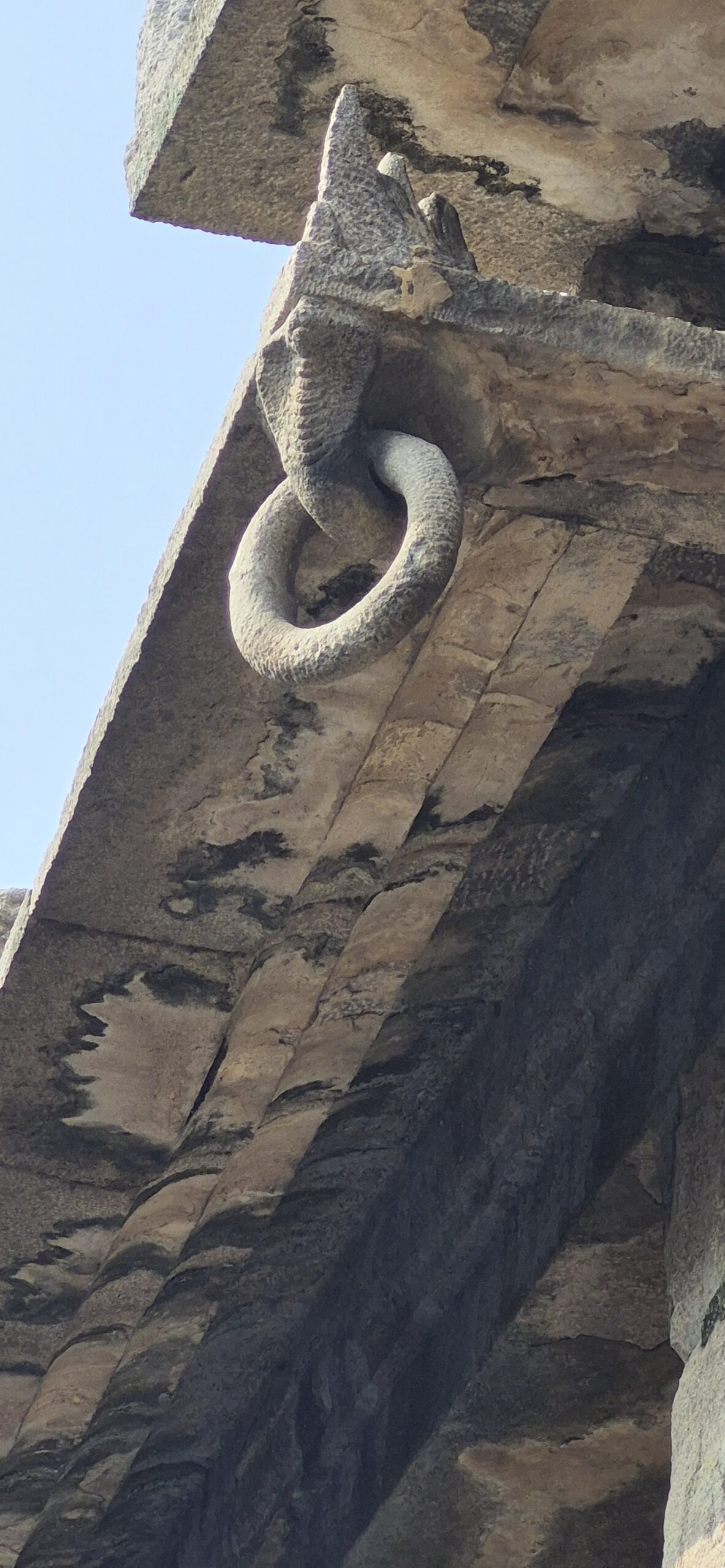
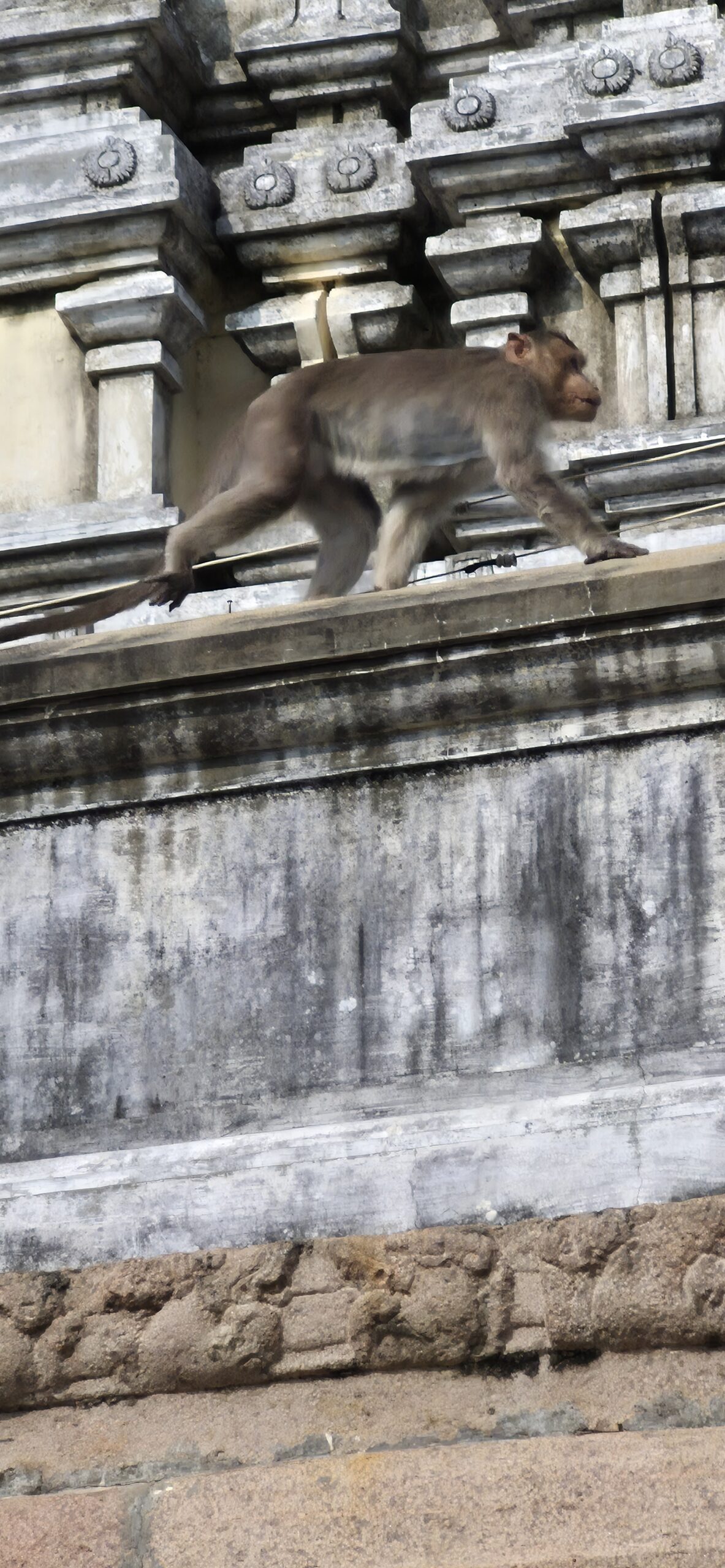
Nearby, we noticed a massive granite slab probably used for cooking. Dr Chithra pointed to a iron ring sculpted out of stone in the corner of the stone roof. Monkeys were everywhere, leaping about with complete ownership of the premises. A tall standing Garuda near a Tulasi maadam greeted us as though guarding the sanctity of the space.

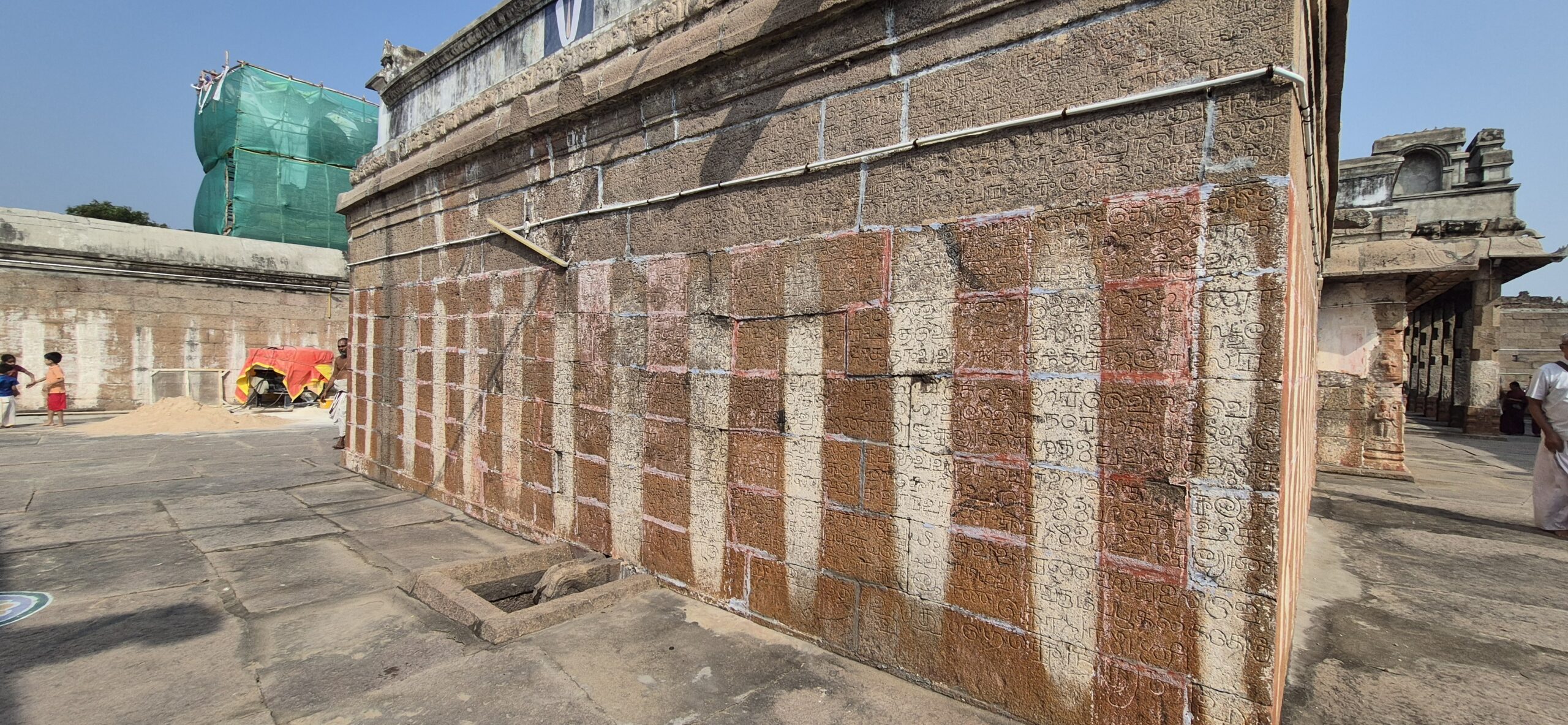
We walked to the outer prahāra where the 20 verses of the Hanumath Vimsathi was etched into stone — poetry born of crisis, now immortalised in granite perhaps by a well-wisher at a later date. I reached out and touched the wall gently. History felt tangible beneath my fingers. Must look this up and get to know the essence of these verses, I made a mental note.

“How is it,” I wondered silently, “that so many of us do not know about this temple, yet so close to Chennai?”
Soon it was time to leave. We boarded the bus again, this time heading towards another architectural marvel nearby — the Nadavaavi, the stepwell.
Nadavaavi – Built especially for Sri Varadaraja Perumal.
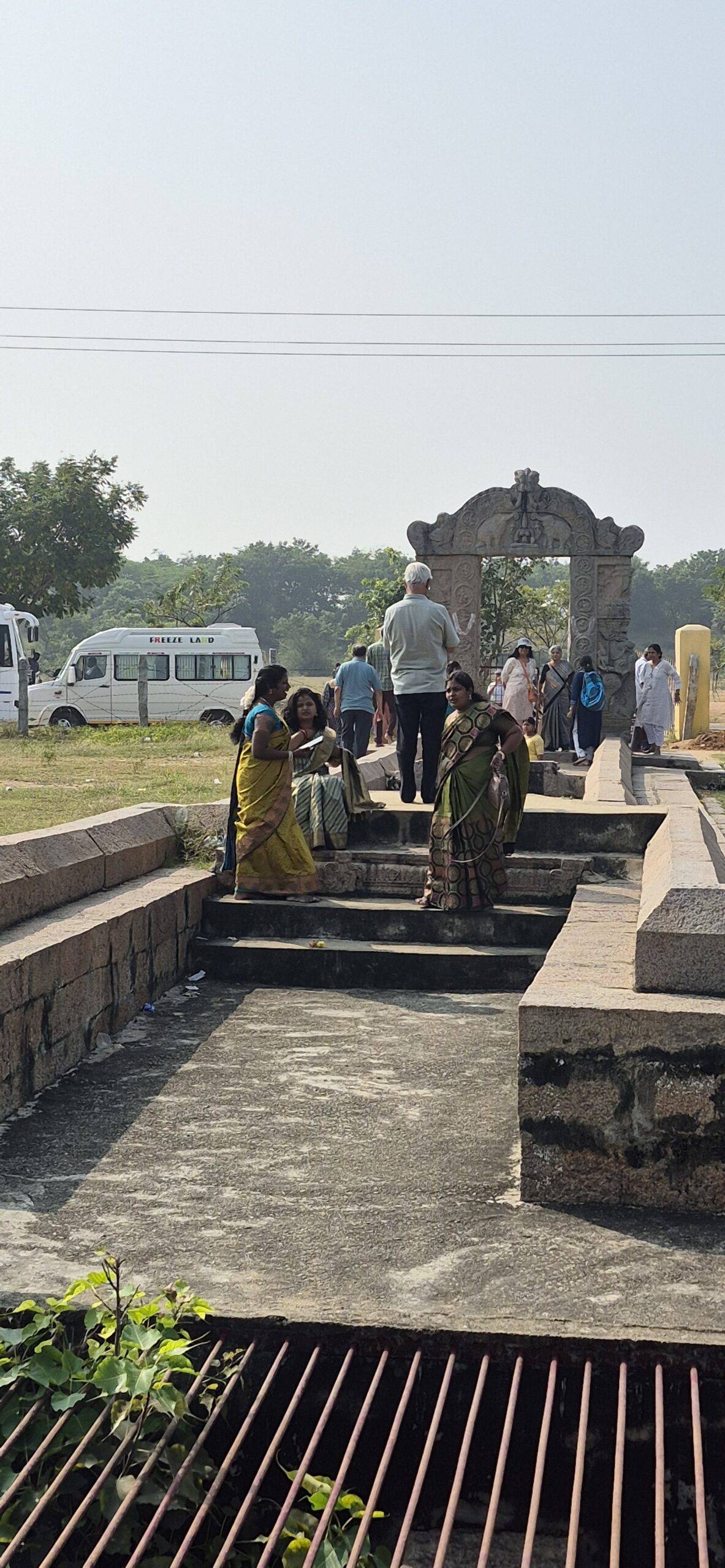
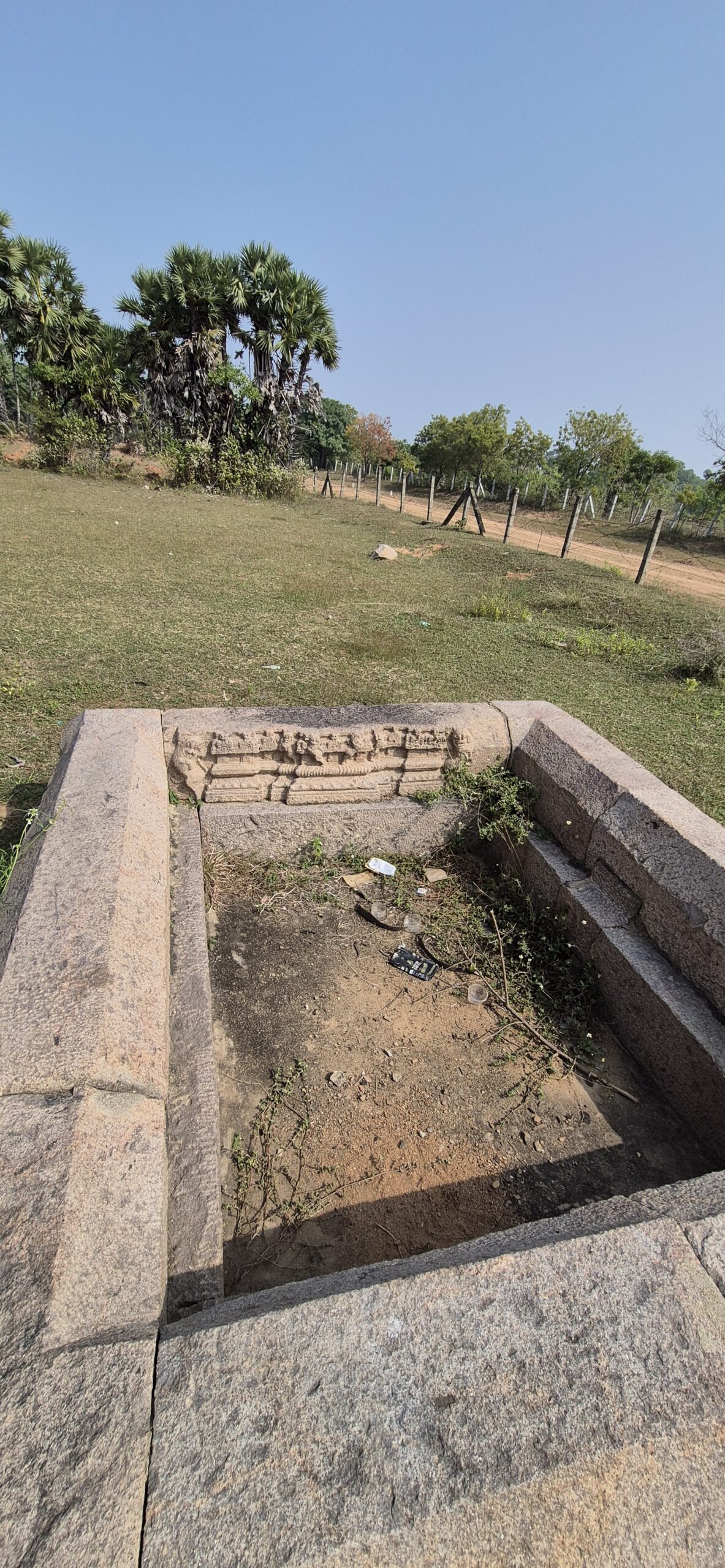
Dating back to the 17th century Vijayanagara period, this stepwell is closely associated with the Varadaraja Perumal temple of Kanchipuram. Unlike the elaborate and labyrinthine stepwells of Gujarat or Rajasthan, this one is simpler — but no less graceful.
Twenty-seven steps lead downward into its depths.
We could not descend fully, as it was filled with greenish water. Most of the exquisitely carved mandapam below remained submerged, visible only partially. It is said that during the Tamil month of Chithirai, on Chitra Pournami, Varadaraja Perumal is brought here in procession. The water is siphoned off and the well cleaned. The Lord then stands within the mandapam in all His splendour. Naivedyams are offered, and devotees throng to witness this rare darshan. By evening, He returns to Kanchipuram. This beautiful structure was built primarily only for this purpose.
Standing there, looking down into the cool recesses, I could almost imagine it — the stone chamber below feeling like natural air-conditioning, the flicker of lamps against damp granite, the fragrance of flowers mingling with the scent of ancient stone. How fortunate these villagers are to have The Lord himself come over here and shower His grace, every April/May.
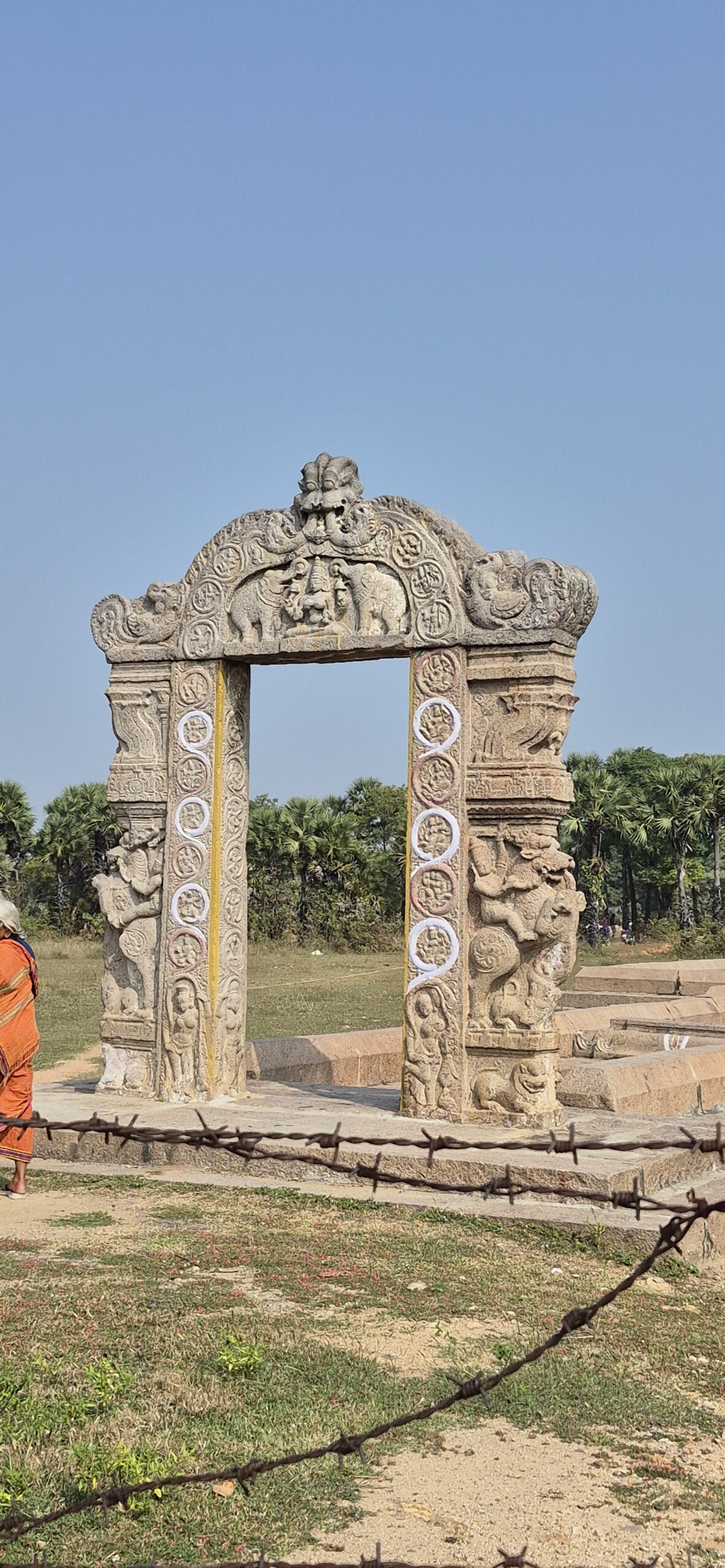
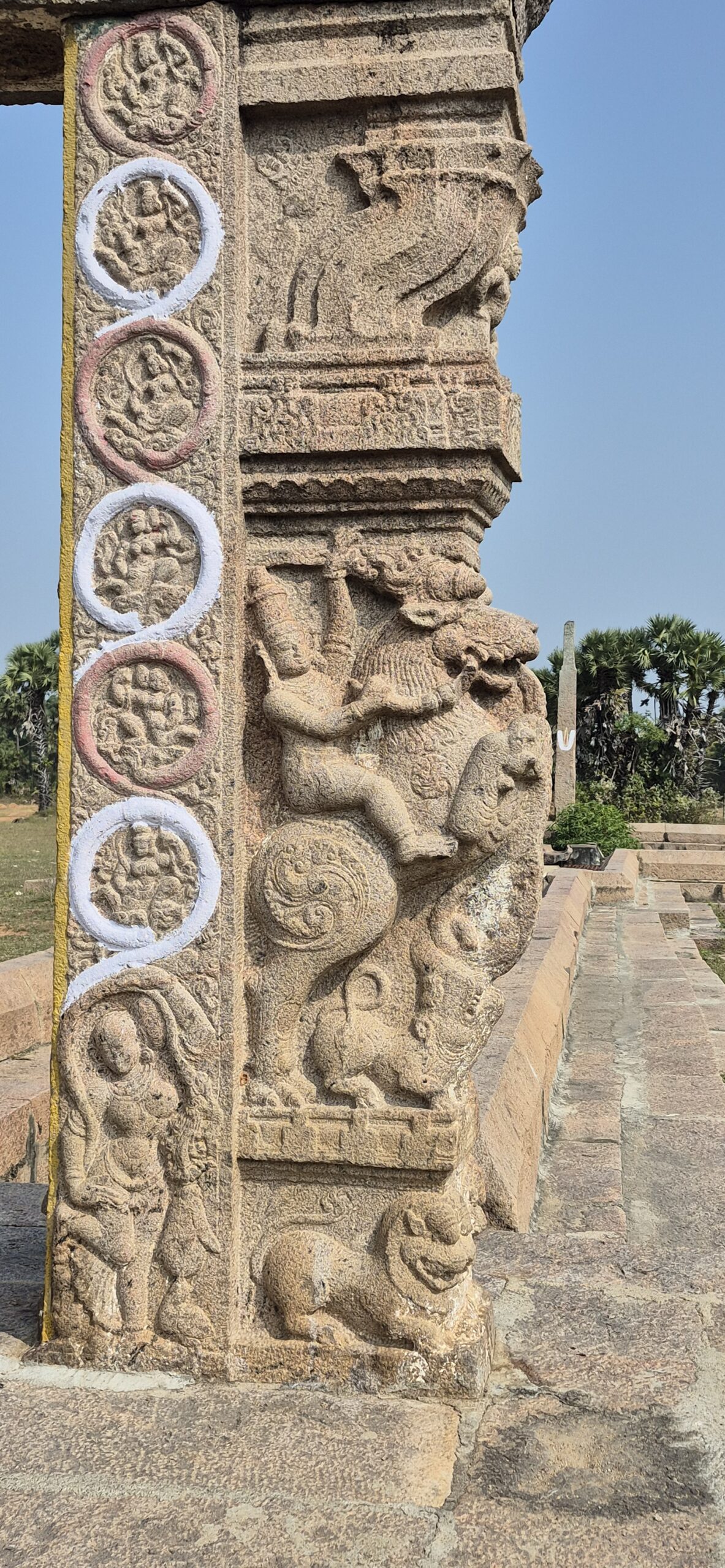
The entrance pillars were works of art. At the top, Gajalakshmi presided benevolently. Flanking the structure were two majestic yālis. Delicate circular panels depicted dancers and musicians. At the base stood the river goddesses Ganga and Yamuna, guardians of purity.
In the middle of nowhere this sculpted doorway stands tall, almost defiantly saying, “I don’t want to blend in, but stand out”

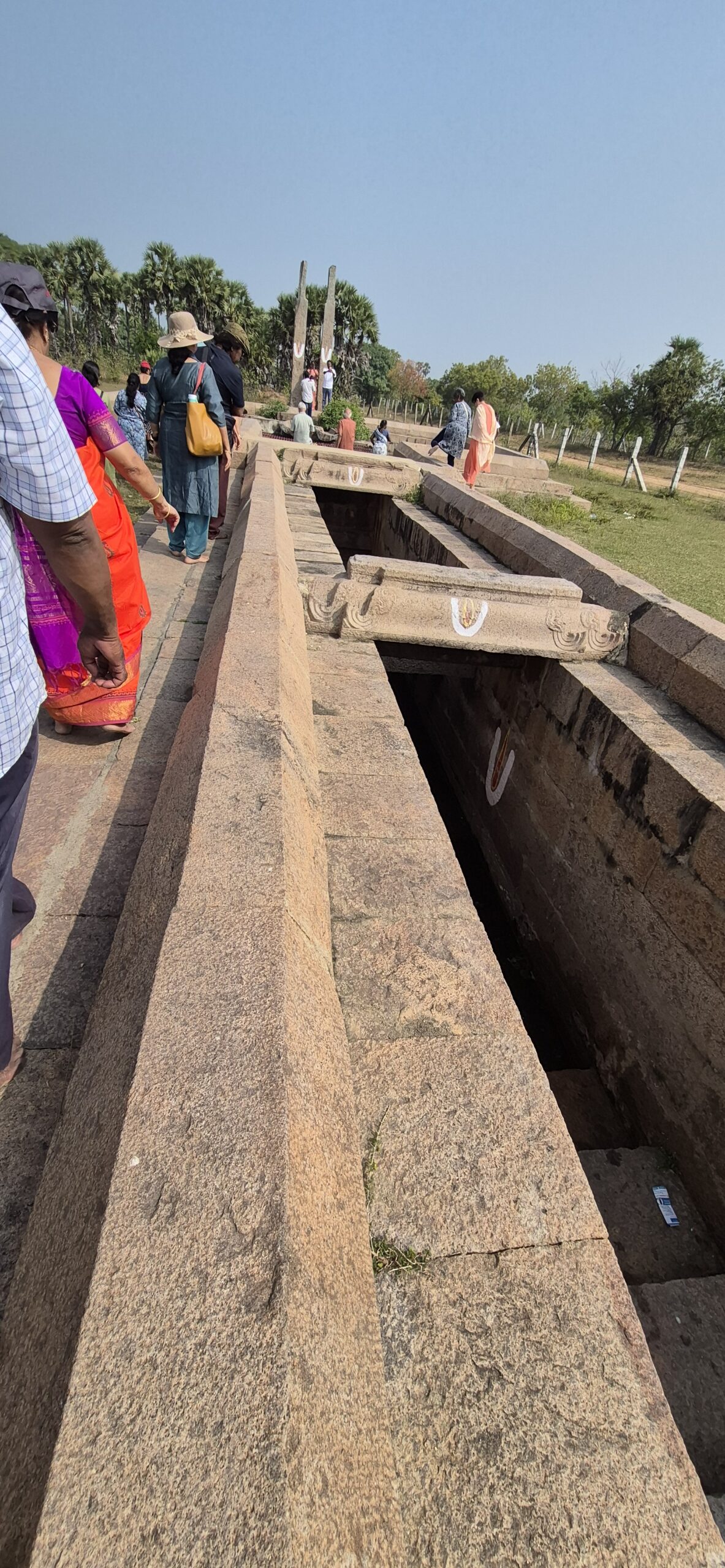


Though not as grand as the famed North Indian stepwells, this Nadavaavi (it literally means walk well) holds its own quiet dignity.
I felt grateful — for historians who keep stories alive, for patrons who built in devotion, and for these lesser-known spaces that still utter their secrets to those willing to pause and listen.
Some journeys are Stunning and Spectacular.
And some — like Ayyangar Kulam — are rustic, quaint and peaceful.
Location: Situated 9 km south of Kanchipuram town, reachable within 5 minutes from the “Ayyangarkulam Koot Road” junction on the route from the Collector office to Vandavasi. Google maps is accurate.
Good morning Meghasen,your narration prompted us to visit this temple today itself.Thank you very much
I fully agree that lesser know temples weave an irresistible charm. Your journey to this place has been so beautifully put down that I could feel that irresistible charm, living through it by just reading it. The quaint stillness, calm and serene surroundings was felt in your sojourn and as usual the history of lesser known places brought out in the most captivating and beautiful way. It prods one to go out and discover for yourself the unknown, to experience tell tale traditions of a tangible past. Loved the way you have written it.
Hi Megu I love the way you narrate, now I want to see this temple. Thanks for sharing the wonderful experience with pictures.
Loved the first two lines: “I have always had a soft corner for lesser-known temples. The quieter they are, the closer they seem to the divine.” Better to be with a lonely temple, than the so-called ‘famous’ ones and sit in silence. After all, God is silence. Photographs gave visual treat!
Megu, your description temple and the well was truly wonderful to read. You have captured not just the history and significance, but also the spiritual essence of the place so beautifully. The way you described the architecture, traditions, and ambience made it feel as though I was right there with you all. It reflects your keen observation, devotion and curiosity.. Keep them coming please 🙏
Meghu ! yet another free visit to a new less known temple.your choice of words in narrating the site is too good.enjoyed reading it.
Super…very well written…got the feeling of visiting the temple.
Thank you so much for sharing this temple tour experience, Megha. There is something about rustic old temples that mesmerizes me. No loud colors. Simple, pure and majestic, it makes me feel closer to God and nature. I totally loved all the photos of the temple, sculptures and of course the monkeys. As notorious as monkeys can be, they definitely make a temple visit feel more fun.
Thank you Meghalai,for the detailed awesome description of the temple & it’s surrounding places, lovely pics &videos,the exquisite carvings are so beautiful. must visit in our bucket list now.
Beautifully written with lovely photographs. Your writing inspires me to visit this temple soon.
wonderful vivid inspiring description it feels as if we joined u in this trip to kancheepuram